Everything has infrastructure.
Does your stock?
You build the road for the destination, before the traffic. You build the power lines for the need, complete the build, then add the load. Acorn builds the same foundation under your stock, so it rests on understanding, not on the next headline.

Build for the destination. Complete the build. Then add the load.
Atlanta | Sarasota | New York

1. The company
The company vs. the stock
The company is what you build, sell and operate. The stock is what people buy because they believe it can make money over the next 2 to 3 years.
You can run a great business and still have a stock nobody holds for the long term.
2. The stock
Capital raise vs. infrastructure
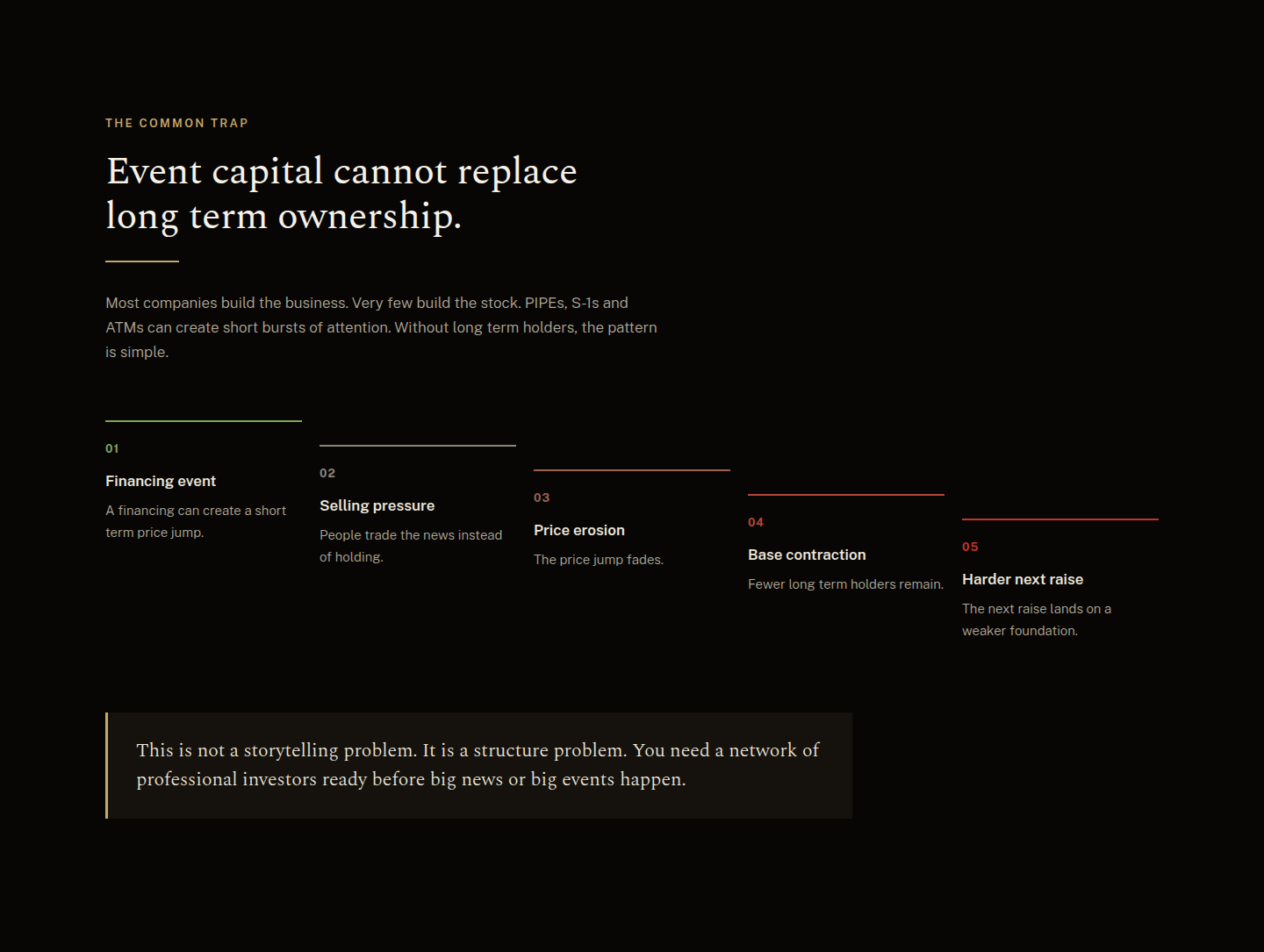
You can raise money. But without a strong base of long term holders, the raise lands badly and the stock gets sold off.
The stock needs its own support system too.
The Metaphor
“Roads before traffic.
Power lines before load.”
You build roads before cars use them. You build power lines before electricity flows through them. The value is in the network being ready before demand arrives. Your stock works the same way.
A company should not have to begin educating the market from a standing start each time it announces a milestone, approaches a financing or enters a new stage of growth. The professional network needs to be developing before those events occur and maintained after they pass.
of long term, broker controlled capital, built and maintained on an Acorn network as the company keeps proving its model. We teach and show the value. The company’s execution proves it.
Infrastructure is preparation, not hype.


PwC
Projects global passive assets under management to reach $70T by 2030, and reports that 89% of surveyed asset managers faced profitability pressure over the prior 5 years. The size of the industry is not the same as attention available to one issuer.
Morgan Stanley
Argues that higher volatility, higher rates and greater dispersion favor active judgment. The investment case must be understandable on its own merits, not simply as exposure to an index or sector.
FINRA
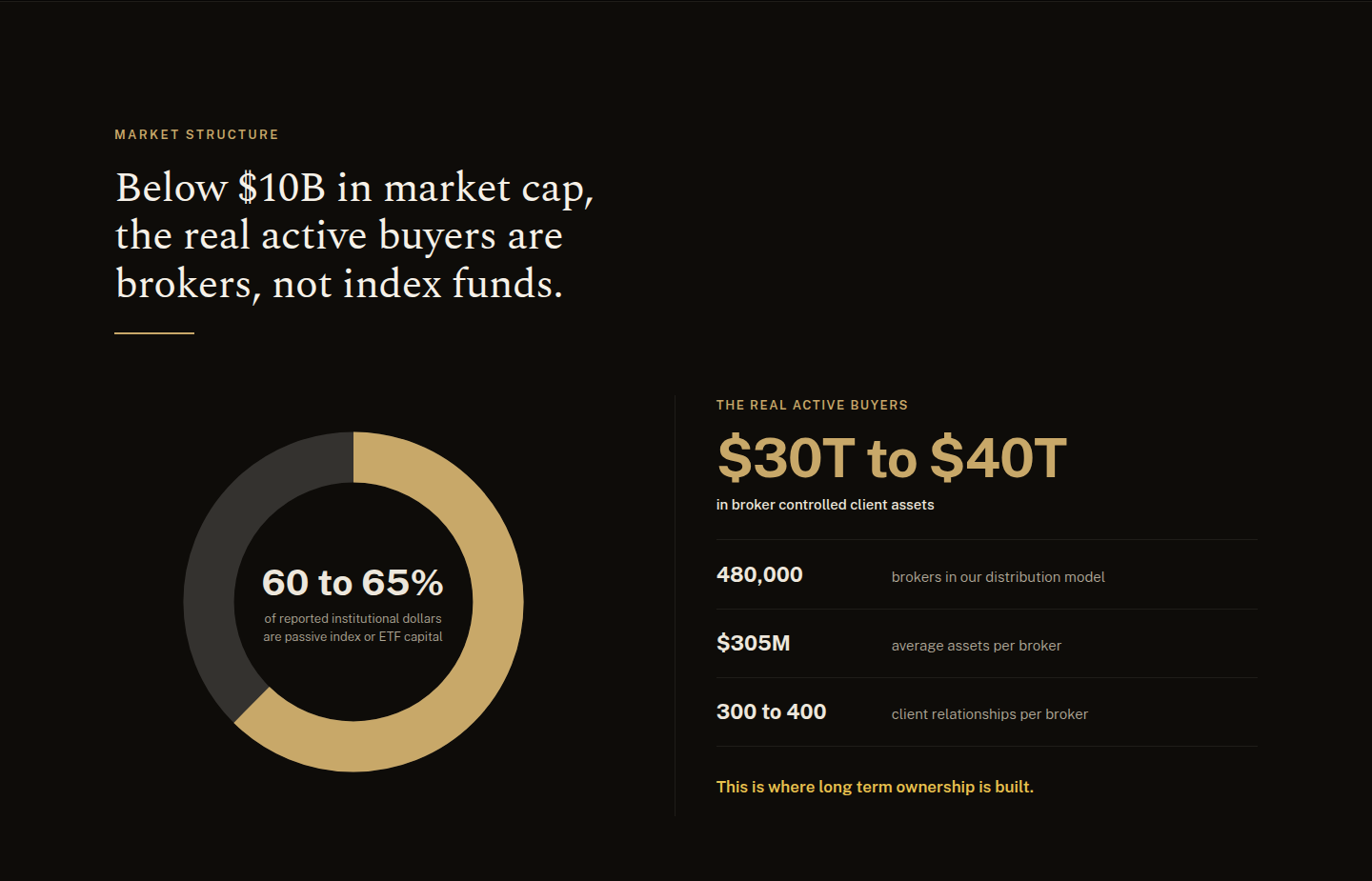
Reported 639,723 registered representatives in 2025. That industry count is separate from the 480,000 broker universe in our model, and neither is the size of one issuer’s reachable network.
Academic research
Work by Marco Sammon and by Lux and Pead at Harvard Kennedy School points to weaker price discovery and coverage for smaller companies. Smaller issuers are not discovered automatically.
Third party research provides market context, not an endorsement of Acorn. Broker universe, asset and passive share figures are Acorn internal planning estimates, not independently verified market statistics.
The price gate
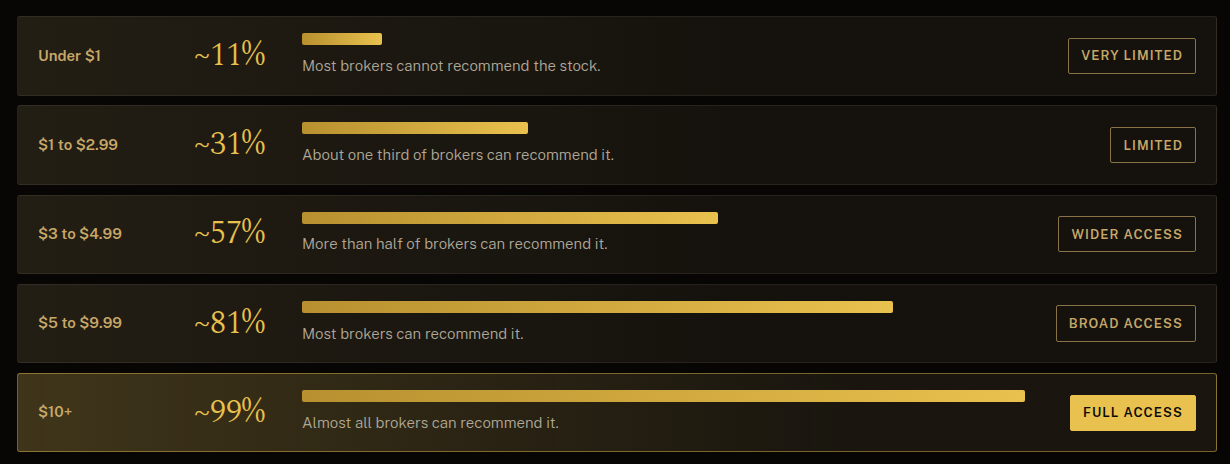
Your share price determines who can recommend your stock.
Brokerage firms have rules. The higher the share price, the more brokers are allowed to recommend the stock to clients. Price is not just optics. Price is access.

Estimated broker clearance rates are Acorn internal access estimates, not regulatory approval rates. Firm policies for low priced securities are risk based and can consider listing, reporting status, liquidity and other factors, as described in FINRA Regulatory Notice 21-03.
The operating system
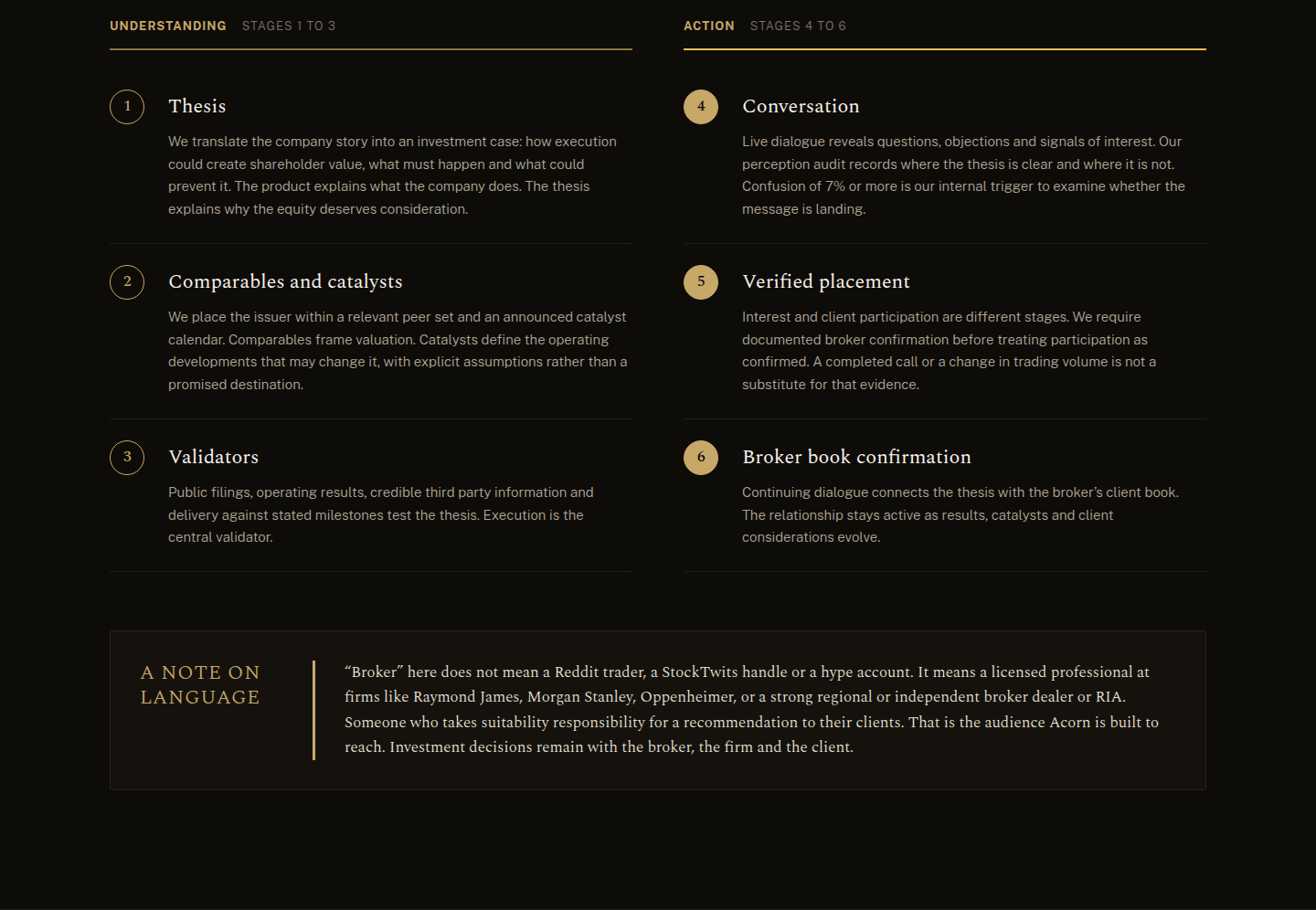
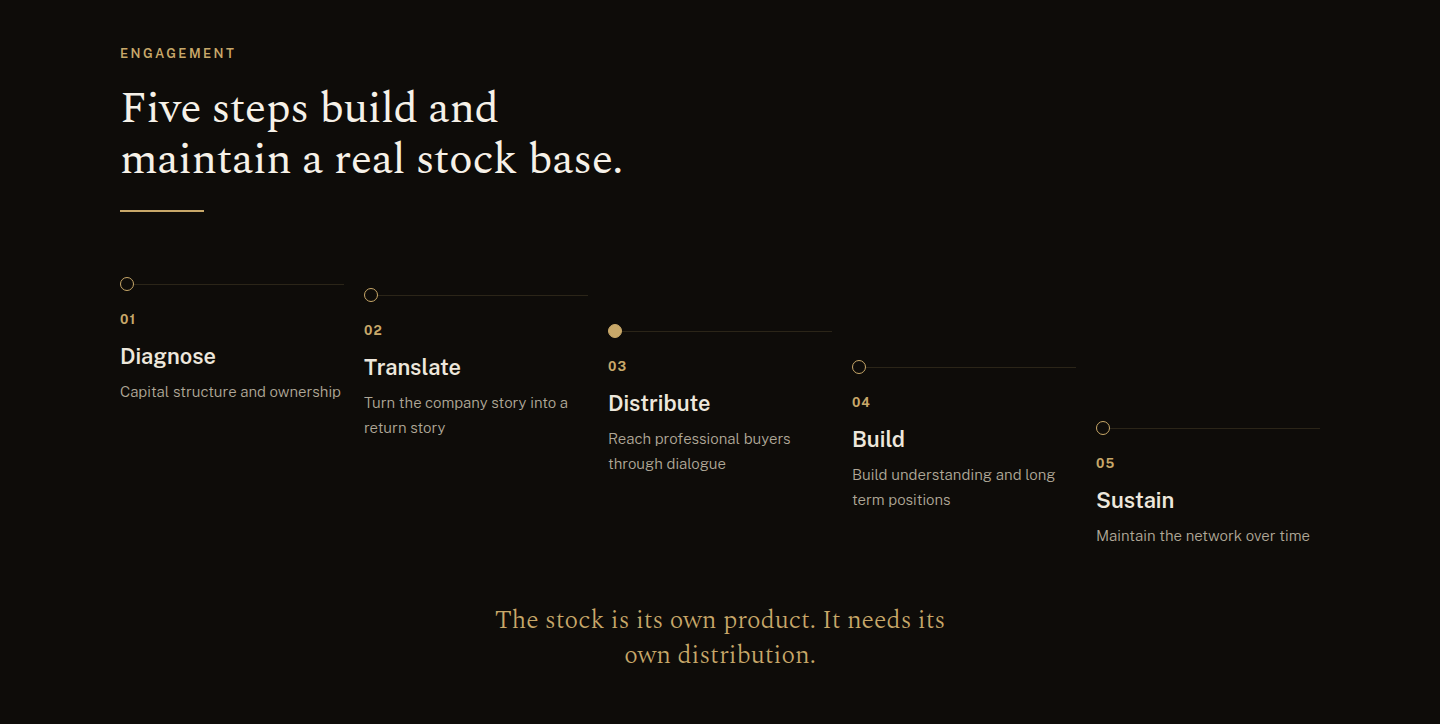
A 6 stage progression, modeled on how brokers are trained.
Our process moves from understanding to dialogue and documented participation through 6 connected stages. Each conversation creates information that improves the next. The discipline is continuity, not a sequence of disconnected pitches.


Investor relations from our New York office →


.png?width=237&height=75&name=logo%201(1).png)